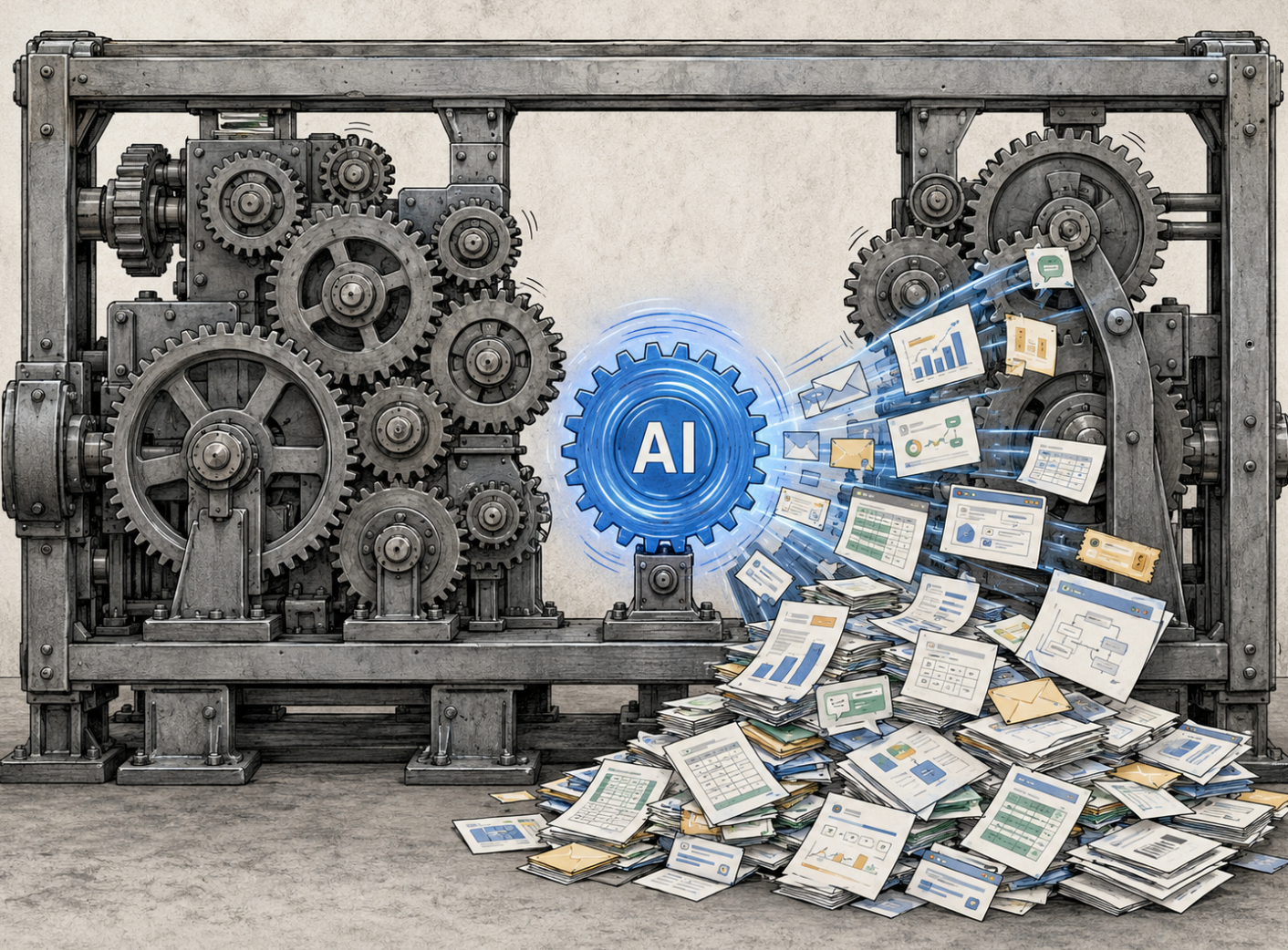
AI is falling into the same efficiency trap that spreadsheets have created in supply chains for decades.
It’s making individual tasks more efficient without improving end-to-end flow.
Spreadsheets became “the glue” between disparate supply chain systems because operators needed flexibility and speed. ERPs, WMSs, and TMSs are too rigid, and BI solutions mean waiting on IT.
Spreadsheets made it easy. Need to share an open PO list with a supplier? Download the data, adjust the fields, create a few vlookups, and share it in Excel. Immediate results with zero IT support.
But this kind of efficiency comes with real downsides like siloed data, undocumented institutional knowledge, and poor version control, which cause bottlenecks in information flow.
A PO tracking spreadsheet that helps a buyer and supplier move faster will also increase risk because the data isn’t kept current, doesn’t flow to all the teams that need it (supply planning, manufacturing, finance), and isn’t reflected in the systems of record in a timely manner. A delivery date updated in the spreadsheet but missing from the ERP leaves purchasing, planning, and customer commitments out of sync. Scale this across hundreds of spreadsheets spanning teams, trading partners, and planning cycles and the problem compounds.
Meanwhile, the organization doesn’t address the problems that prevent better information flow, including accessing scattered data where it lives, defining exception tiers and ownership, establishing which system is authoritative for each decision, and documenting workflows.
AI amplifies this efficiency trap because it automates faster and wider. It can draft emails, automate data entry, rapidly build ad hoc reports, and even make judgment calls like auto-resolving exceptions. But if it’s working off poor information like a stale date, quantity, location, or SOP, it will confidently propagate incorrect data across the supply chain.
Without operational context, clear ownership, and high quality data, AI simply accelerates activity around the problem without improving the outcome.
The question isn't whether AI saves time. It’s whether that saved time translates to value where it matters: fewer exceptions, cleaner handoffs, better decisions. Local efficiency is real, but making tasks faster doesn’t mean end-to-end flows improve.
Where have you seen AI create more speed without delivering better outcomes?