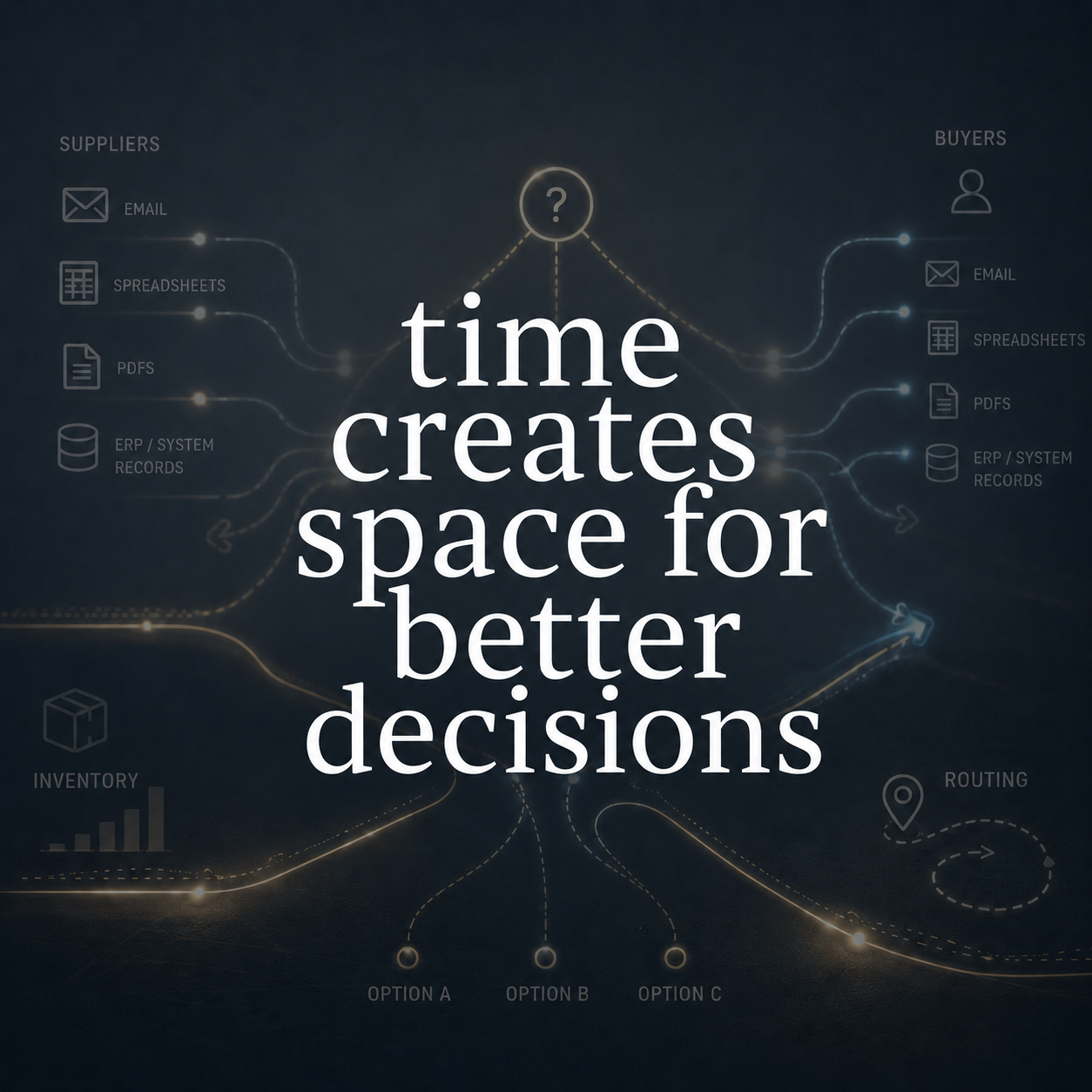
“AI saves your team time” undersells the value.
The real value is what that time buys: space to think and act while the problem is still cheap to fix.
Supply chain teams aren’t slow. They’re blind.
The problem isn’t just scattered data. It’s untrusted systems, missing context, and manual coordination. Every exception requires the same loop: find what changed, reconcile it against available information, assess the impact, decide if it matters, and coordinate the response.
Teams are racing the clock to piece together email, Excel, ERP records, PDFs, and meeting updates just to spot problems before they can act.
Exceptions decay fast. The moment reality diverges from the plan, risks compound and options dwindle. A shortage or delay caught today is a phone call. Caught next week, it’s an expedite. Any later, it’s a line-down or a customer miss.
Automation mandates haven’t fixed this problem. Forcing long-tail suppliers into portals and templates creates more delays, data quality issues, and supplier frustration.
Traditional automation tries to force structure. AI doesn’t.
AI can monitor scattered updates across channels and formats, reconcile them against what the business already knows, and identify which changes matter. It can apply company-specific SOPs and routing rules, push exceptions to the right person while there is still time to act, and track follow-up through escalation and resolution.
Every action leaves a trusted audit trail, so teams can learn from outcomes and improve how work gets done.
Saving time is not the point.
Making better decisions that reduce cost and risk is.